
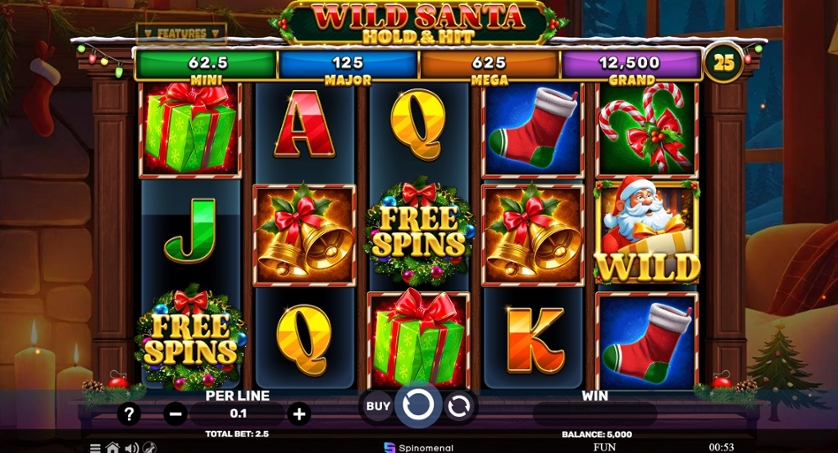
Online casino marketing leans heavily on the visual appeal of free spins. Banners splash promises of fifty, one hundred, or two hundred bonus rounds across registration screens, often framed around high-profile slots known for massive payout multipliers. To the casual player, these offers read like open tickets to the game’s advertised jackpot potential. If a game advertises a top payout of 5,000 times your stake, a batch of free spins feels like fifty opportunities to hit that exact ceiling.
In reality, the underlying terms tell a completely different mathematical story. Tucked within the general promotional terms or buried beneath an innocuous asterisk lies one of the most restrictive mechanics in online gambling: the maximum win cap. Far from being a routine anti-fraud protection measure, max win caps fundamentally alter the mechanics of the game you are playing, diluting its value and effectively neutralizing the variance that makes slot machines rewarding in the first place.
The Illusion of High-Variance Slots on Bonus Rounds
Casino operators rarely assign free spins to low-volatility titles where payouts are frequent, predictable, and small. Instead, promotional packages almost exclusively feature high-volatility favorites such as Book of Dead, Big Bass Bonanza, or Gates of Olympus. These titles are chosen intentionally because their brand recognition is immense and their feature rounds can theoretically pay thousands of times the bet size.
The deception lies in the conflict between how high-variance slots are designed and how promotional caps govern them. High-variance games are programmed with a top-heavy pay table. A significant portion of the game’s overall Return to Player (RTP) is concentrated in rare, outsized events—namely, bonus features, multi-tier multipliers, and full-screen premium symbol connections. In a standard session using real cash, you accept dozens of dead or low-paying spins precisely because the rare runaway feature compensates for that attrition.
When a casino introduces a maximum win cap—frequently set at $50, $100, or a modest multiple of the spin value—it eliminates the entire right side of that statistical distribution curve. If you trigger an extraordinary bonus sequence on a ten-cent promotional spin that would normally return $400, a $50 win cap immediately discards the remaining $350. You absorb all the harsh dry spells native to high-variance games without retaining any right to the outsized rewards that mathematically justify playing them.
The Technical Mechanics of Win Caps in the Fine Print
Win caps are not standardized across the industry. Different platforms implement them at different stages of the player journey, and understanding where the restriction triggers is critical to identifying how much value you actually retain.
Per-Spin Caps Versus Aggregate Promotion Caps
A per-spin win limit caps the allowable payout on any individual spin within your promotional batch. If your cap is set to $10 per spin across a set of twenty spins, hitting a $60 combination on spin number five results in an immediate forfeiture of $50, while your remaining spins proceed normally.
An aggregate promotion cap, which is substantially more common, limits the total balance generated across the entire allocation of spins. Under this model, all twenty spins run their course, and the aggregate balance is evaluated against the ceiling. If the cap is $50 and your total accumulated winnings hit $85, the excess $35 is removed either instantly upon completion of the spins or at the moment you initiate a withdrawal request.
Max Cashout Versus Max Conversion
The terminology used in bonus terms often masks a critical structural distinction between conversion and cashout:
-
Maximum conversion dictates the ceiling on bonus funds that can transition into real cash once playthrough obligations are fulfilled. If you start with $30 in free spin wins, complete the wagering requirements, and your balance grows to $200, a $100 max conversion rule permanently slices your balance down to $100 before shifting it to your withdrawable wallet.
-
Maximum cashout applies specifically to the cashier window. Even if the system allows you to build a larger balance and continue playing across multiple titles, any withdrawal transaction originating from the promotional credit is strictly bounded by the cashout cap. Any funds remaining in the account post-withdrawal are typically confiscated by automated audit protocols.
The Double Squeeze: Win Caps Paired with Playthrough Requirements
Win caps rarely exist in isolation. In almost every standard casino promotion, free spin winnings are credited as bonus money rather than clean cash, subjecting them to wagering requirements ranging from 30x to 65x. The interplay between win caps and wagering requirements creates a compounding disadvantage that mathematical models heavily favor.
The timing of when the cap is enforced completely changes player equity. Consider two common operational structures:
In pre-wagering capping, the operator applies the win limit immediately after the free spins conclude. If you win $180 from your spins, but the cap is $50, your bonus balance is reset to $50 before wagering begins. If the rollover requirement is 40x, you must now place $2,000 worth of qualifying wagers ($50 multiplied by 40) starting from a $50 bankroll. Surviving that volume of action with a micro-bankroll requires immense luck; you are effectively tasked with churning through forty times your starting stack without going broke.
In post-wagering capping, the casino leaves the full $180 intact for the duration of the wagering process. Having $180 makes it considerably easier to absorb the statistical house edge over a 40x playthrough. However, after you successfully complete the wagering milestone and bring your balance across the finish line—say, maintaining a balance of $140—the cashier trims the balance down to the $50 cap upon withdrawal. You carry all the operational risk of clearing the bonus, only for the operator to claim the upside at the moment of payout.
In both instances, the house protects itself from catastrophic variance while leaving the player exposed to standard statistical attrition.
The Real Mathematical Damage: Diluting Theoretical RTP
Every licensed online slot features an officially audited Return to Player percentage, typically hovering around 96%. This metric is calculated across millions of simulated game rounds and assumes an uncapped payout environment.
When a casino artificially caps the payout ceiling, the effective RTP drops precipitously. If the top 5% of a slot’s payout potential accounts for 15% to 20% of its long-term return model, eliminating that top bracket via a promotional cap directly reduces the game’s return profile.
On a standard ten-cent spin on an uncapped 96% RTP slot, the house edge is 4%. But on that exact same spin governed by a $50 or $100 cap, the effective RTP for the player can plummet into the 70% range or lower. The game engine continues to pull randomness from the certified Random Number Generator (RNG), but your ability to realize the value of high-multiplier outcomes is disabled. You are, in essence, playing a compromised version of the math model without receiving any compensatory reduction in house edge during non-winning spins.
Spotting Predatory Clauses in Promotional Terms
Evaluating a free spin offer requires looking past the headline quantity of spins and assessing the governing conditions. Operators employ specific phrasing that signals severely restrictive bonus mechanics.
One warning sign is tiered conversion limits tied to historical deposits. Some operators insert rules stating that winnings from free spins cannot exceed two or three times the amount of the qualifying deposit. A player depositing the minimum $20 to claim 100 free spins might find their ceiling hard-locked at $40 or $60, regardless of what the main promotional page suggests.
Another critical clause involves the treatment of in-game jackpots. In progressive jackpot games or titles with fixed “Grand” prizes, industry-standard ethics dictate that pooled progressive jackpots should be exempt from bonus win caps. Predatory terms, however, explicitly state that any jackpot payout triggered during promotional play remains subject to the maximum cashout threshold. Hitting a $10,000 progressive jackpot on a promotional spin only to have the withdrawal capped at $100 represents the absolute worst-case scenario of promotional fine print.
Look out as well for aggressive post-win restrictions, such as extremely tight maximum bet limits applied while working through free-spin rollover. If your spins produce a modest $30 balance subject to a cap, but the terms limit maximum bets to $1.00 while wagering, you are locked into a slow grind against the house edge that ensures statistical balance depletion.
How to Calculate True Promotional Value
Before accepting any free spin package, you can calculate the actual expected utility using three core variables: the spin value, the volume of spins, and the cash conversion ceiling.
A promotion offering 200 free spins valued at $0.05 each represents $10 in total underlying wager value. If that offer carries a 45x wagering requirement and a strict $30 maximum win cap, the probability of walking away with any withdrawable profit is statistically negligible. You are taking on substantial playthrough friction for a potential upside that barely exceeds a standard casual session.
Conversely, an offer of 25 free spins valued at $0.20 each represents direct parity in gross wager value ($5 total), but if it comes with zero wagering requirements and a $100 cap—or no cap at all—the expected value shifts heavily in your favor. You retain every dollar produced, face zero rollover attrition, and can withdraw the balance immediately.
The true value of promotional play is never found in the quantity of spins advertised on the homepage. It is dictated entirely by how much of your variance the casino permits you to keep. When win caps truncate top-end payouts while leaving playthrough requirements intact, the promotion functions less as an authentic gaming session and more as an extended demo mode with severe financial friction. Scrutinizing the cap before opting in ensures you spend your time on promotions that allow mathematics to work in your favor rather than against you.
