
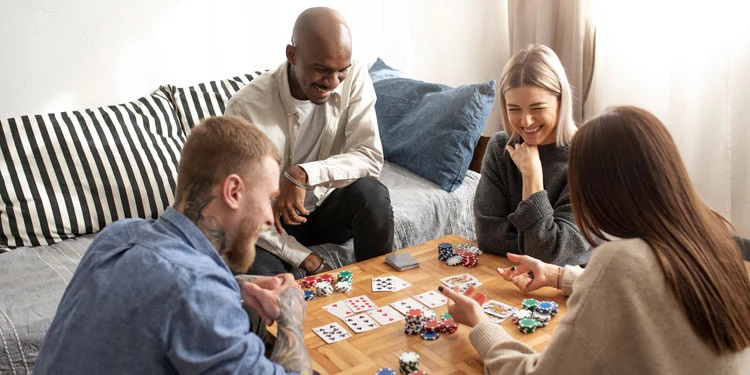
Card games are more than just a way to pass time—they are powerful social tools that bring people closer together. Across cultures and generations, card games have created shared moments of laughter, competition, and connection. Their simple structure and interactive nature make them ideal for strengthening relationships in both casual and meaningful ways.
Why Card Games Encourage Social Connection
Unlike many solo or screen-focused activities, card games require face-to-face interaction. Players must observe, communicate, react, and adapt to others at the table, naturally fostering engagement.
Key reasons card games build social bonds include:
-
Continuous interaction between players
-
Shared goals and friendly competition
-
Opportunities for conversation and storytelling
-
Equal participation regardless of age or background
These elements help break down social barriers and create a sense of belonging.
Card Games as Conversation Starters
Many card games create natural pauses and moments that spark conversation. Whether it’s teasing after a clever move or celebrating a surprise win, players are encouraged to talk, laugh, and react together.
Social benefits include:
-
Reducing awkwardness in new groups
-
Helping introverted players engage more comfortably
-
Encouraging humor and light-hearted banter
This makes card games especially effective at parties, family gatherings, and social events.
Team-Based Card Games and Cooperation
Some card games rely on partnerships or teams, requiring players to communicate subtly and trust one another. These games reinforce cooperation and shared responsibility.
Team-based play helps develop:
-
Mutual understanding and non-verbal communication
-
Trust between partners
-
A sense of shared achievement or loss
Such dynamics mirror real-life collaboration, strengthening interpersonal bonds.
Strengthening Family Relationships Through Card Games
Card games are a staple of family bonding because they allow multiple generations to play together on equal footing. Children, parents, and grandparents can all participate, learn, and enjoy the same experience.
Family-focused benefits include:
-
Teaching patience and turn-taking
-
Encouraging respectful competition
-
Creating traditions and recurring family rituals
Over time, these shared experiences become cherished memories.
Card Games in Friendships and Social Circles
Among friends, card games often become a recurring social activity. Regular game nights help maintain connections even when schedules are busy.
Playing together regularly:
-
Reinforces routine social interaction
-
Strengthens long-term friendships
-
Provides a low-pressure way to stay connected
The shared language of inside jokes and memorable moments deepens friendships naturally.
Emotional Benefits of Playing Card Games Together
Beyond entertainment, card games offer emotional value. Winning and losing together teaches empathy, sportsmanship, and emotional regulation.
Emotional growth supported by card games includes:
-
Handling disappointment gracefully
-
Celebrating others’ success
-
Managing competitive emotions in healthy ways
These experiences help players better understand themselves and others.
Card Games as Icebreakers in New Groups
In unfamiliar settings, card games serve as excellent icebreakers. They provide a shared focus, reducing social anxiety and encouraging interaction without forced conversation.
This is especially useful in:
-
Team-building events
-
Educational settings
-
Community gatherings
The game itself becomes the bridge between strangers.
Frequently Asked Questions (FAQs)
1. Why are card games better for social bonding than digital games?
Card games promote direct interaction, eye contact, and real-time conversation, which digital games often lack.
2. Can card games help shy or introverted people socialize?
Yes, card games provide structured interaction, making social engagement feel more natural and less intimidating.
3. Are card games effective for team-building activities?
Absolutely. Team-based card games encourage cooperation, communication, and trust among participants.
4. Do competitive card games harm relationships?
When played respectfully, competition can actually strengthen bonds by teaching sportsmanship and emotional control.
5. How often should people play card games together to build bonds?
Even occasional play can help, but regular game nights create stronger and more lasting connections.
6. Are card games suitable for mixed-age groups?
Yes, many card games are adaptable and enjoyable for players of different ages and skill levels.
7. Can card games replace other social activities?
While they shouldn’t replace all interaction, card games are an excellent complement to conversations, meals, and gatherings.
